


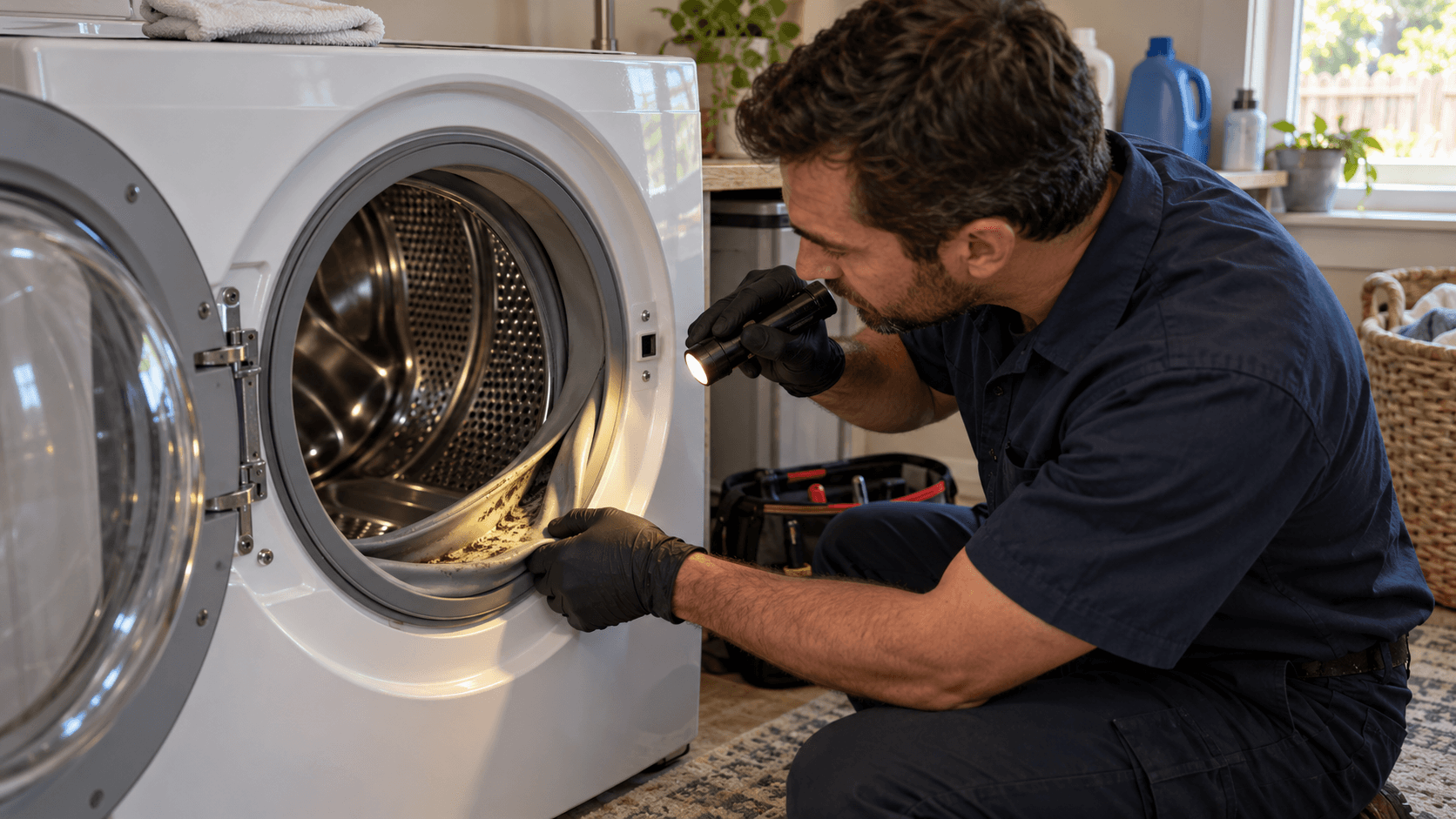
Knowing how to clean washing machine drums, door seals, and dispensers comes down to one hot cleaning cycle a month and about twenty minutes of wiping the places that cycle can’t reach. Skip it and detergent residue builds up behind the drum, the door seal grows mildew, and clean laundry starts coming out smelling like the machine. The steps below work for front-load and top-load washers. They also cover the tip most guides get wrong, which is vinegar, and the point where a smell stops being a cleaning job and becomes a repair.
Key Takeaways
- Clean a washing machine once a month using its cleaning cycle with a washing machine cleaner tablet or liquid chlorine bleach.
- The cleaning cycle misses three places: the dispenser drawer, the folds of the door seal, and the drain pump filter. Do those by hand.
- Whirlpool advises against pouring vinegar into the drum because the acid can weaken rubber seals and hoses over time.
- Never combine vinegar and bleach. Together they produce chlorine gas.
- A washer that still smells or holds water after a full clean has a drainage problem, and that needs a technician.
How Often Should You Clean Your Washing Machine?
Once a month. Maytag’s guidance on washer odors calls for a Clean Washer cycle every month, and warns that using more detergent than recommended speeds up the residue behind the smell.
High-efficiency washers need it most. LG’s help library explains why: they use much less water, so soap and soil can stay behind after each cycle and feed mildew. Clean sooner if you notice any of these:
- A musty smell when you open the door or lid
- Gray or black specks on the door seal
- Clean laundry that smells sour once it dries
How to Clean a Washing Machine in Six Steps
Check your owner’s manual first for the name of the cleaning cycle (Clean Washer, Tub Clean, Basket Clean, or Self Clean) and the cleaner the manufacturer allows.
- Empty the drum. Washing machine drum cleaning only works with nothing in it.
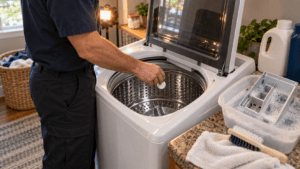
- Add the cleaner. Drop one washing machine cleaner tablet into the drum, or add liquid chlorine bleach in the amount your manual gives. Use plain bleach, because Maytag warns that thickened or no-splash types can oversuds.
- Run the cleaning cycle. No cleaning cycle? Use the hottest, longest normal cycle.
- Clean the dispenser drawer. Pull it out, soak it in hot water with a little detergent, scrub the corners, rinse, and dry.
- Wipe the door area. On a front-load washer, pull back the folds of the rubber door seal and wipe out the lint, hair, and gray film. On a top-load washer, wipe the lid, the tub rim, and the agitator.
- Rinse and air it out. Run a rinse and spin to clear leftover cleaner, then leave the door or lid open until the drum is dry.
Two things depend on the type of machine you own:
| Part | Front-load washer | Top-load washer |
|---|---|---|
| Problem spot | Folds of the rubber door seal | Rim of the tub and under the agitator cap |
| Drain pump filter | Usually behind a small panel at the bottom front. Drain it into a shallow dish and rinse the filter. | Often no user-serviceable filter. Check the manual. |
How to Clean a Washing Machine with Vinegar, and Where not to
Vinegar is the most repeated washer-cleaning tip online, and Whirlpool tells owners to keep it out of the drum. The company’s advice on cleaning with vinegar is that the acid can weaken rubber seals and hoses over time and lead to a costly repair.
The same guidance names two places where vinegar is fine:
- Dispenser drawers, removed and soaked in equal parts white vinegar and water, then rinsed and dried
- Exterior surfaces, wiped with a cloth dampened in a vinegar and water mix
Not every brand agrees. LG lists vinegar among its tub-clean options, so your manual has the final word. One rule has no exceptions: never use vinegar and bleach together, because the mix releases chlorine gas. And a hose that has already failed can’t be cleaned back to health. Drain hoses are among the parts replaced during washer repair in Austin.
When a Clean Washing Machine Still Smells or Won’t Drain
A clean drum that smells again within days means water is sitting somewhere it shouldn’t. That’s a mechanical problem, and another cleaning cycle won’t touch it. Our guide to why a washing machine stops draining covers the usual causes: a clogged drain hose, a blocked pump filter, or a failing drain pump.
Stop cleaning and book a visit when you see any of these:
- Water left in the drum after the cycle ends
- An odor that returns days after a full clean
- Error codes, or a cycle that stops partway
Foul odors and clothes that don’t come out clean are both on the list of problems handled by our washing machine service in San Antonio. A ProStar technician shows you the part that failed and gives you the estimate before any work starts. Every washer repair on a front-load, top-load, or high-efficiency machine uses original manufacturer parts and carries a 90-day warranty on parts and labor.
Frequently Asked Questions About Cleaning a Washing Machine
What is the best thing to clean the inside of a washing machine?
The best thing to clean the inside of a washing machine is a washing machine cleaner tablet or liquid chlorine bleach, run through the machine’s own cleaning cycle on hot. Maytag and LG both name those two in their care guidance. Use one or the other, never both together, and follow the amount in your manual.
Can I put vinegar and baking soda in my washing machine to clean it?
You can, but it’s a weak method with a real downside. Vinegar is an acid and baking soda is a base, so mixed together they largely cancel each other out. Whirlpool also warns that vinegar in the drum can weaken rubber seals and hoses over time. A cleaner tablet or bleach does the job with less risk.
How can you deep clean a washing machine?
Deep clean a washing machine by running its cleaning cycle with a cleaner tablet or bleach, then cleaning the three places the cycle doesn’t reach: the dispenser drawer, the folds of the door seal, and the drain pump filter on front-load models. Finish with a rinse and spin, and leave the door open to dry.
Why does my washing machine still smell after I clean it?
A washing machine that still smells after a full cleaning usually has standing water inside it. A partly clogged drain hose, a blocked pump filter, or a weak drain pump leaves dirty water behind after every load, and mildew grows back within days. Cleaning can’t fix that. The drainage fault has to be repaired first.
Book Washer Repair in San Antonio or Austin When Cleaning isn’t Enough
Run the monthly cycle, clean the drawer, seal, and filter by hand, and keep vinegar out of the drum unless your manual says otherwise. If the smell comes back or water stays in the drum, the machine needs a repair.
ProStar takes appointments 6 AM to 10 PM, every day, at our San Antonio location and our Round Rock location serving greater Austin, with roughly 2,000 Google reviews at a 4.93 average behind the work. Book now online at any hour, or call (210) 941-4634. A technician will find where the water is sitting and fix the cause.

